
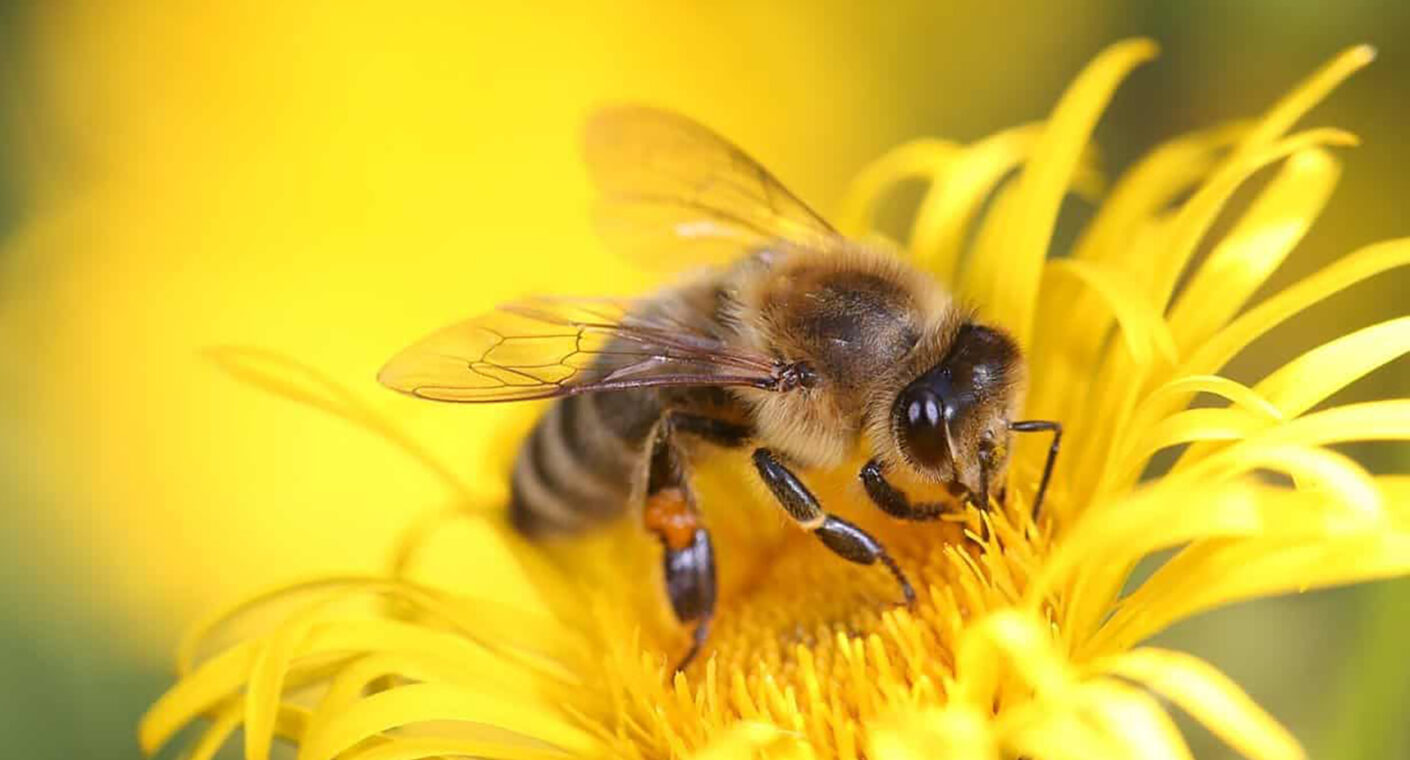
Pollination in Chile falls short of our export ranking, which has consequences for the quality and yield of fruit trees (as well as other crops). With the help of specialists from Fraunhofer Chile Research and international expert Dr. Mayda Verde, we reviewed solutions to issues of health, hygiene, growth, nutrition, orchard management… and we also took a look at the little-known diversity of native bees.
What is important?
It is estimated that the demand for pollination between October and November in the central region is between 750,000 and 950,000 bees, roughly, while the supply is around 450,000.
It’s not so much about having a large number of hives, but about having a large number of bees, specifies Mayda Verde:
because the business isn’t about having hives.
One aspect that fruit growers should keep in mind when receiving their pollinators is that it’s not the wood that will do the work, but the population contained within it.
The Cuban veterinarian advises paying attention to management practices appropriate to the bee population:
A hive without a population cannot maintain the necessary temperature of 34-35°C. I’ve seen empty spaces in hives in Chile during the cold season. How can so few bees thermoregulate such a large space?” For this purpose, the Langstroth hive is like an accordion, with its movable honeycombs.
Farmer’s responsibility in the use of plant protection products
- The role of the fruit grower is vital to the efficient performance of bees. They must take care of them; otherwise, it’s like paying for something and then being determined that it won’t work.
- Beyond the obvious recommendation to avoid chemicals toxic to bees while they are in the field, many producers are unaware that even applying harmless pesticides at the wrong time can be harmful.
- “Some people think,” says Pamela Rodriguez, “that they can, for example, freely apply a fungicide when the label indicates that it doesn’t affect bees. But by doing so during the hours when they are working, you wet them in mid-flight and kill them because they get chilled, because they can’t return to the hive. If you have to apply it, do it early in the morning or late in the afternoon, before they leave the hive or after they return.”
- “I’m not sure what to do.” Dr. Mayda Verde shares the Cuban experience, where not only are any bees within the property protected, but all beekeepers located in the risk area are notified whenever a pest control product is to be applied. This is possible thanks to the mapping of apiaries and the existence of a producer registry.
Drinking fountains, benches, layout: These are simple measures that improve the working conditions of female factory workers.
Water Supply
Bees need a source of water. “Of the 70 apiaries I visited, I only saw waterers in two,” says Sharon Rodriguez. “The lack of water in the orchard is not only a major factor in mortality, but also in reduced foraging efficiency, since in the absence of water, bees are forced to spend time searching for it elsewhere,” she points out.
“When water is scarce,” explains Dr. Verde, “bees suck the hemolymph from the younger larvae to give it to the older ones. The larvae from which the hemolymph is sucked die and decompose inside the hive, reducing the population.”
Furthermore, hives in direct contact with the ground can be affected by humidity, especially when it rains. They also become accessible to ants, one of their main enemies. They should be placed on special stands or platforms.
Dr. Mayda Verde Jiménez
Veterinarian and Researcher
Apicultural Health Project 2020 LatAm
Fraunhofer Chile Research.