
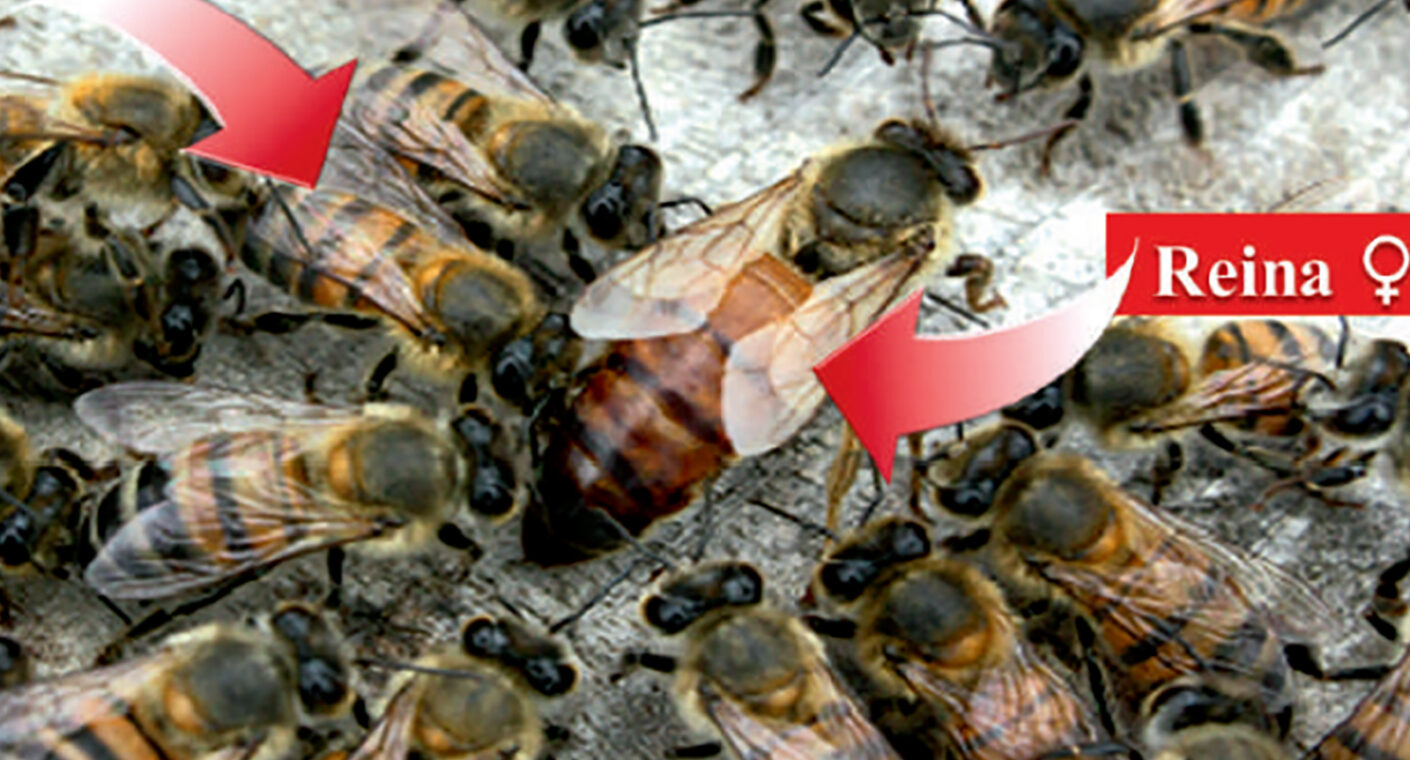
The queen bee lives for several years, while worker bees and drones live only a few months. The lifespan of worker bees is shortened by intense foraging, the need to search for food over long distances or the lack of food, and external factors that force them to make additional efforts, such as thermoregulation during harsh and prolonged winter seasons, or during periods of intense heat, especially when the hive is located in places lacking shade and they are forced to beat their wings to evaporate water from inside the colony, or when strong winds damage their wings or other body parts.
A beehive does not raise drones if food supplies are scarce.
If there is a sudden interruption of nectaries, the worker bees kill the drones present, and they appear dead or dying in front of all the hives in the apiary. Understanding this cause of mass mortality is important to differentiate it from other causes of death by various pathogens.
Queens and worker bees develop from fertilized eggs (diploid – 32 chromosomes), while drones, the males, develop from unfertilized eggs (haploid – 16 chromosomes). The total development of a queen, from egg to adult, takes 16 days, a worker 21 days, and a drone 24 days. On the fifth day after hatching, the larvae release pheromones that signal to the adult bees tending them that the cells containing them should be capped. The cap is the porous wax lid or “seal” that covers the brood cell until the molt, a process of metamorphosis, is complete and the bee becomes an adult. The life cycle includes the stages of egg, larva, prepupa, pupa, and adult (imago).
THE DRONE:
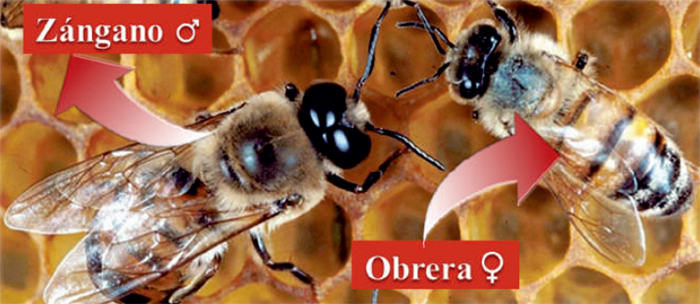
The drone has a short, robust body. Two large compound eyes are prominent on its head. The worker bee is the smallest of the castes and the most numerous in the colony. The queen bee is unique. Her body is almost twice as large as that of the worker bee and 2.8 times heavier. Her weight ranges from 210 to 280 mg (X 250 mg), and her length is 20 to 25 mm or more. The abdomen, 15 to 20 mm long, is quite developed and protrudes behind the wing tips. Photo: Courtesy of José D. Vilar Vilar. Brazil, 2010.
The castes are differentiated by the time it takes for the metamorphoses to occur
These differences are determined by the length of time the brood remains unsealed (uncapped) or sealed (capped), the dimensions and shape of the cells in the honeycomb, and the morphology of the adult individuals, which are specific to each sex. There are also differences in the performance of functions or activities within the colony.
Worker bees build the honeycombs, feed the young of all castes, and care for the queen bee. They clean the cells and the hive, groom their fellow bees, collect nectar, pollen, propolis, and water, evaporate the water from the nectar and concentrate it, knead and store the pollen into “bee bread,” recirculate the air, and regulate the temperature of the colony and the swarm. They cap the cells, defend the colony from intruders, and coat the cell walls with propolis as a protective measure, protecting the hive from the elements.
The propolis prevents the movement of the movable combs and the decomposition of predator carcasses that the worker bees cannot expel. Worker bees eliminate drones when there is hunger or if necessary, and lay eggs to ensure the development of this caste. They explore new food sources or nesting sites and polish the wooden surfaces inside the colony.
From the book: Beekeeping – Health and Production. Thanks to:
- Dr. Mayda Verde Jiménez
Apiculture Specialist. Member of the Food Hygiene Society of the Cuban Veterinary Scientific Council. - Dr. Jorge Demedio Lorenzo, PhD.
Professor of Parasitology and Apiculture. Doctor of Veterinary Sciences. Agrarian University of Havana “Fructuoso Rodríguez”. Ministry of Higher Education, Cuba. - Dr. Tomás Gómez Bernia, MSc.
Senior Specialist. Food Safety Group.
Master of Science. National Directorate. Institute of Veterinary Medicine. Ministry of Agriculture.
President of the Food Hygiene Society of the Cuban Veterinary Scientific Council.