
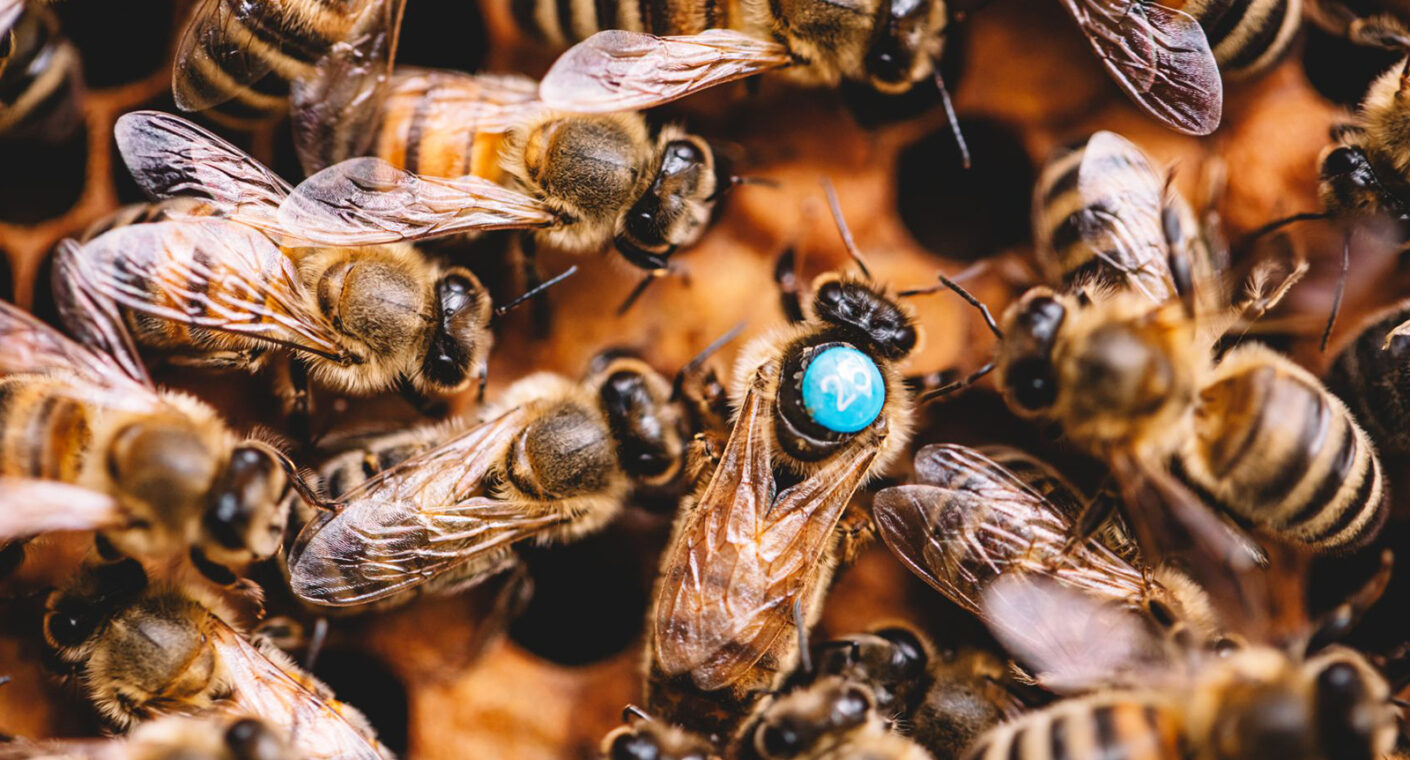
The queen bee is the heart of the colony; she is the seed of modern beekeeping. Production and health depend on her. For this reason, in Cuba, queens are bred in specialized centers under a Genetic Improvement Program managed by the Ministry of Agriculture (MINAG), with regulatory health measures in place for their replacement and sale. Replacing queen bees in modern hives under intensive management must be done with selected animals from specialized, health-certified breeding facilities.
The above guarantees:
- Maintain a high number of broods, with a larger population of worker and replacement bees. A vigorous hive, in turn, ventilates and thermoregulates better, and can store more food, resulting in higher production of honey, wax, and royal jelly.
- Ensure the availability of queens free of pathogens that compromise the health of the colony. The breeding center guarantees, through clinical or field inspection, that they are free of diseases caused by parasites, viruses, fungi, and bacteria, in both adult bees and brood, except for Varroa destructor and Acarapis woodi, pathogens of parasitic diseases, for which only low infestation rates are permitted, achieved through biotechnical measures and good production practices.
- Produce offspring that are less prone to swarming or are less defensive, with clean or hygienic habits, better nectar collectors, or other traits of interest to the beekeeper. Swarming colonies decrease productivity and promote the spread of diseases affecting the species. Meanwhile, colonies with strong hygienic practices contribute to the health of the population by eliminating infectious mummies, debris, and carcasses from inside the hive.
- Work with queen bees that do not have malformations or physical defects.
- Use well-fertilized queens with a body weight of over 250 mg and ready to lay eggs.
- Shorten the broodless period caused by queenlessness in productive hives. This promotes uniformity and stable production in the apiary.
Abejas reinas marcadas según el color:
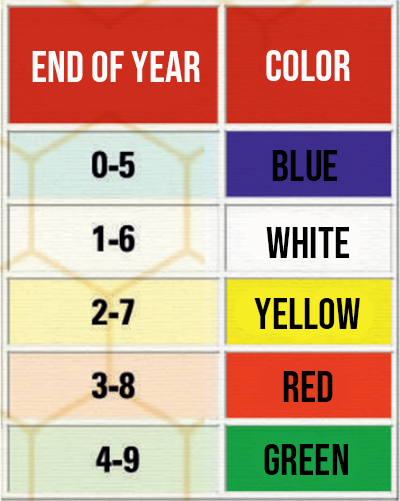
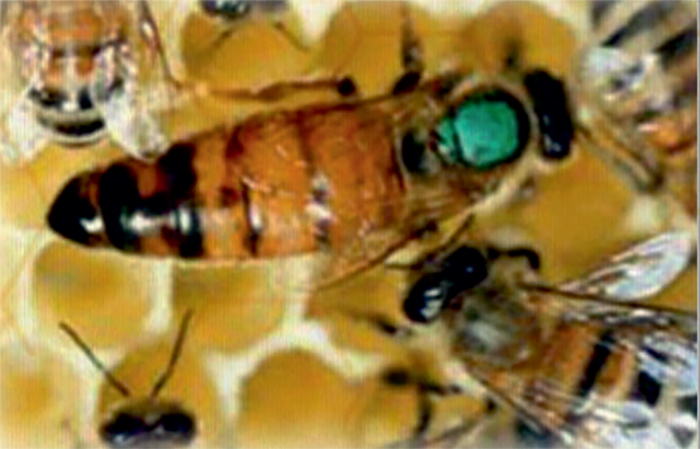
- Working with queens from genetic centers, marked according to the color corresponding to the year and certified by the Institute of Veterinary Medicine (IMV). This allows for their rapid identification, determining their age, and preventing accidents when handling the hive.
- In Cuba, it is established that the queen must be replaced every 12 months and, without exception, eliminated if she exhibits poor egg-laying or offspring with undesirable characteristics: poor hygienic behavior, excessive swarming, or when the colony shows signs of brood disease.
Young and adult bees
Productive beehives
In the modern beehive, nothing is left to chance. For it to be productive, proportional, harmonious, and stable mathematical relationships must be maintained between the number of capped and uncapped brood cells; between the number of brood combs and their castes; the combs with ripe and unripe honey; the number of combs with pollen reserves; and the number of empty drawn combs with open, clean, and prepared cells, so that the queen can lay 2,000 to 2,500 eggs per day. At the same time, a number of individuals of each caste are born cyclically, adjusted to the days their respective metamorphoses last, allowing for the replacement of those that die without disrupting these equations.
A young and prolific queen ensures a greater number of brood
Which in turn leads to more nurse bees and foragers. The demand for food increases, and with it, foraging activity. At the same time, more adult bees capable of working will be born, resulting in greater colony development and a larger number of combs with reserves of honey and pollen. The hive grows and develops dynamically yet harmoniously, in accordance with the conditions provided by the beekeeping ecosystem. Production, yields, and health are expressions of the internal balance achieved by the colony and the balance it, in turn, maintains with the ecosystem.
She will never visit a flower.
It seems a contradiction, yet her majesty will never see the color or smell the aroma of flowers, and she will never taste the fresh nectar or sweet honey. It sounds surreal that bees, having lived in symbiosis with flowers for millions of years, would have a queen who doesn’t even know them.
She will rarely see the light of day.
The life of the queen bee Apis mellifera is approximately 5 to 6 years, during all that time she will live in the darkness of the hive, except when she leaves to mate or when she swarms, and also when beekeepers briefly check the hives.
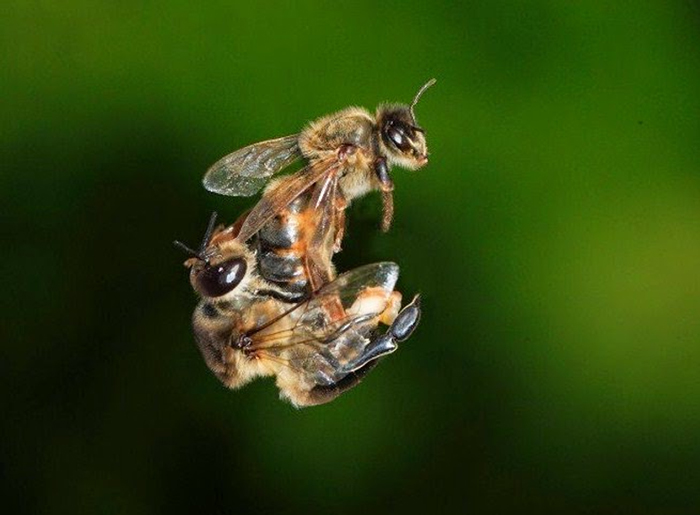
Wedding flight:
The nuptial flight is the critical process where the virgin queen bee leaves the hive (usually between 5 and 10 days after hatching) to mate in the air with multiple drones (often 15-16 or more) at an altitude of about 700 meters. She stores the sperm in her spermatheca for her entire life, returning to become an egg-laying queen.
Its scent gives its family its identity.
The hive is governed by scents that identify it; this intense and particular smell of each colony is emitted by the queen and is called a pheromone. For this reason, it is almost impossible for there to be two queens in a hive.
She is an excellent egg layer.
During the summer, this great mother has a lot of work to do, laying 2,500 to 3,000 eggs daily, which creates a large number of worker bees. Therefore, if the colony grows too large, the queen swarms and establishes a new home with the worker bees that attend to her and provide optimal conditions to continue.
The queen bee (Apis mellifera) doesn’t rule.
Contrary to popular belief, the queen doesn’t make any decisions. Those who decide are the younger worker bees, the ones still working inside the hive.
She is raised in a queen cell.
A queen’s birth in the hive is a very important event. Unlike worker bees, which are born in individual cells, the queen has a special chamber where she is raised. It’s called a queen cell and is often vertical, like a peanut. The royal jelly constantly changes, allowing the queen to defy gravity and prevent her from falling.
Can the queen bee (Apis mellifera) be replaced?
If she fails to perform her duties, she is replaced. There are many reasons for this, including illness, poor physical condition, and low egg production.
Other reasons include missing wings or legs, injuries, old age, disease, a depleted spermatheca, and the queen being derived from unsuitable larvae.
From the book: Beekeeping – Health and Production. Thanks to:
- Dr. Mayda Verde Jiménez
Apiculture Specialist. Member of the Food Hygiene Society of the Cuban Veterinary Scientific Council. - Dr. Jorge Demedio Lorenzo, PhD.
Professor of Parasitology and Apiculture. Doctor of Veterinary Sciences. Agrarian University of Havana “Fructuoso Rodríguez”. Ministry of Higher Education, Cuba. - Dr. Tomás Gómez Bernia, MSc.
Senior Specialist. Food Safety Group.
Master of Science. National Directorate. Institute of Veterinary Medicine. Ministry of Agriculture.
President of the Food Hygiene Society of the Cuban Veterinary Scientific Council.